
By Nariman Salem Hame
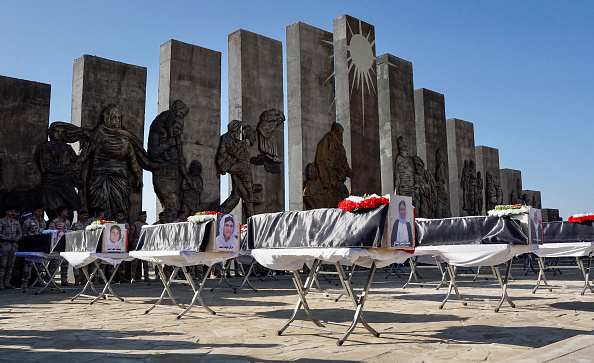
August 3, 2014 marked the beginning of a collective nightmare for the Yazidis, a small ethno-religious community in Iraq. On that day, ISIS seized Yazidi villages in Sinjar, northern Iraq. Within two weeks, ISIS drove out more than 400,000 Yazidis from their homes. On the ground, ISIS enslaved and physically abused over 6,500 women and children. Thousands of Yazidis were executed. UN fact-finding bodies later recognized these acts as genocide and crimes against humanity.
More than a decade later, Yazidis are still seeking justice. Nearly 3,000 women and children are still missing. Over 200,000 Yazidis are displaced. Sinjar, the Yazidis’ ancestral homeland, lies largely in ruins. Few of the perpetrators have been held accountable.
Neither Iraq nor Syria, where the crimes took place, has ratified the Rome Statute or given ad hoc consent to the International Criminal Court (ICC). The UN Security Council has declined to refer the case to the ICC or to establish a dedicated tribunal.
Instead, justice efforts have become dispersed across several forums. Domestic prosecutors in Germany, Sweden, France, the Netherlands, Belgium, Kosovo, and Australia have initiated cases against ISIS members for crimes committed against Yazidis. Separately, over 800 Yazidi survivors have filed a civil suit in New York against the French cement company Lafarge, which paid ISIS to keep its Syrian plant running.
What happens when justice is pursued across multiple jurisdictions and forums?
On April 23, 2026, the Program on Law and Society in the Muslim World, HLS Advocates for Human Rights, the Human Rights Program, and the Middle Eastern and North African Law Students Association hosted a discussion at Harvard Law School on accountability for ISIS’ crimes against the Yazidis. The panel brought together Harvard Law School Professors Alex Whiting and Ioannis Kalpouzos and was moderated by LL.M. candidate and Yazidi lawyer Nariman Salem Hame (LL.M. ’26).
Together the panelists examined accountability efforts for the Yazidis across two tracks: domestic criminal proceedings and corporate accountability.
Domestic Proceedings: Justice for Yazidis in European Courts
First, the panel examined the growing body of criminal proceedings in Europe. Professor Whiting situated the cases within the broader international criminal law framework. He explained how domestic courts have relied on universal jurisdiction and active personality jurisdiction to prosecute ISIS members for crimes committed in Iraq and Syria. Both have become important tools in pursuing accountability where international institutions have been blocked.
These cases are particularly significant for the Yazidi community. Although Iraq has prosecuted ISIS members, these convictions have generally been based on domestic anti-terrorism laws rather than international law. Cases in European courts have therefore become one of the few avenues to legally recognize ISIS’ crimes against the Yazidis as genocide and crimes against humanity.
The panel also discussed how these prosecutions may influence international criminal law. In the Taha Al-J. case, a German court convicted an ISIS member of genocide, crimes against humanity, and war crimes for enslaving and torturing two Yazidis. Notably, the court found genocidal intent even though the defendant targeted only two individuals. In the Lina Ishaq case, a Swedish court convicted a woman of genocide for enslaving Yazidi children. It is the first genocide conviction anywhere in the world based on the forcible transfer of children under Article II (e) of the Genocide Convention.
Corporate Accountability: Victim Participation and Reparations
The second part of the discussion turned to corporate accountability and the Lafarge case. During the Syrian civil war, Lafarge operated a cement plant in Syria. To keep it running, its executives paid over $6 million to ISIS and other armed groups. The payments were made as ISIS was carrying out its attack against Yazidis and other minorities. Professor Kalpouzos addressed the challenges of holding corporations accountable for conduct in armed conflict.
The Lafarge case generated parallel proceedings in both the United States and France. In 2022, Lafarge pleaded guilty in the United States to providing material support to a terrorist organization and agreed to pay $778 million in fines and forfeitures. The case marked the first time a corporation was prosecuted under the Anti-Terrorism Act (ATA). More recently, French courts found Lafarge and eight of its former executives guilty of financing terrorism. Professor Kalpouzos noted that many corporate accountability cases are initiated under anti-terrorism provisions rather than international law.
Still, the Lafarge case holds the potential to move beyond traditional approaches. In France, Lafarge remains under investigation for alleged complicity in crimes against humanity. Lafarge is the first corporation in the world to face such a charge.
The panelists also discussed the limits of victim participation and reparations in corporate accountability cases. To date, none of the forfeited sums has reached ISIS victims. More than 800 Yazidi Americans have filed a civil suit against Lafarge under the ATA, seeking individual damages. That case remains ongoing.
Fragmented Justice?
Taken together, both tracks highlight the promises and the limits of international criminal justice. On the one hand, these proceedings are fragmented and risk offering only an “incomplete” form of justice. Pursued across several jurisdictions, victims have varying access to participate and to obtain reparations. Their ultimate success is contingent upon the political will and legal frameworks of individual states.
And yet, as the discussion underscored, this incomplete justice has been the only form of justice available to Yazidis. These proceedings have given Yazidi survivors a much-needed opportunity to testify, contribute to truth-telling, and participate in a broader transitional justice process in Iraq and abroad. They help develop legal doctrine, combat impunity, and may serve as important precedents for similar situations in which international institutions are blocked.
For the Yazidi community, both tracks—however fragmented—remain an indispensable part of the ongoing struggle for recognition, reparations, and accountability.